Interview With a Psychologist: Part 8 of the Blog Chronicles

The interview series continues, albeit slowly! The responses keep trickling in and I am so happy with this week’s installment! I love these responses. They are honest and thought-provoking!

How do you see a true multidisciplinary team functioning?
In my view, the goal of multidisciplinary teams is to generate useful information to answer questions.
How is the student functioning? What does the student need? What can help the student perform to the best of his/her ability, etc? The answers to these questions lie in the data, both quantitative and qualitative, that team members provide. An effective multidisciplinary team is one in which respectful collaboration and sharing, as well as scrutiny, of pertinent information is highly valued and “safely” implemented. Decisions should be data driven and the impact of emotional factors affecting sound decisions should be managed and if possible avoided. Team members should be valued for their expertise and should avoid makings statements that exceed that expertise. Parents are integral members of the team and should be treated as such.


What message do you have for the powers that be (administration, DOE, elected officials, etc. Your choice).
There is a lot of information that needs to be considered when making educational decisions. It’s really important to avoid assumptions based on incomplete information or ineffectual weighting of certain information. Be supportive of people and of what they are doing.


What do you see as the most pressing issue impacting our students today? Why?
Lack of sleep. Kids are sleeping less and recent studies demonstrate that sleep duration accounts for as much as 64% of the variance in cognitive processes essential to academic functioning. Emotional and behavioral instability as well motivational and physical difficulties is also related to sleep deprivation.

Technology. The explosion of technology over the past twenty years has resulted in the development of amazing tools designed to facilitate learning. The downside is that kids have quick and easy access to all kinds of information – some of which they are not developmentally ready to handle. I also have deep concerns about social media and its impact on the development of social skills as well as its use as a bully weapon. Finally, immediate access to parents and other people via cell phones has many advantages. I do wonder however if the development of critical self soothing skills is interfered with because kids are often quickly rescued from anxiety provoking situations by being able to make immediate calls. 


What energizes you to come to work everyday? What keeps it “fresh” for you?
It’s all about the kids, I like kids and I like being around kids. They have great spirit and the number one priority for most is having fun. They’re healthy for me to be around. Helping kids solve problems and watching them mature and is gratifying and entertaining.


Describe your dream work environment? How does your dream compare with your reality?
How can you make it a reality?

Honestly, it would be on a stage playing my guitar and singing to thousands of adoring fans. I’ve been trying to make it a reality for 43 years. I like seeing people happy having fun. That would be a good way to do it.

As the parent of two teenagers and a witness to the effects of sleep deprivation, I couldn’t agree more! Well, when this psychologist makes it to the stage, I’ll be there to applaud (and dance, and cheer)!

Interview with a Special Educator: Part 7 of the Blog Chronicles

I have been eagerly anticipating the responses from this phenomenal special education teacher! Hot off the presses!


How do you see a true multidisciplinary team functioning?
The reference makes me think most of our evaluation process in which a team gathers with experts in a variety of fields. Working together, we listen to the struggles a classroom teacher may have with a particular student. Each expert offers their interpretation based on their field and through listening to the variety of perspectives we come to an understanding of how to help a student.

What message do you have for the powers that be (administration, DOE, elected officials, etc. Your choice).
I wish that those in power would stop pushing a competitive, business model onto education. I do not believe that the model is working nor is it appropriate to the education of children with such a wide range of needs. Yes, we all want students to be proficient readers and critical thinkers but in pushing for educational performance over and above all other economic, environmental, physical, and cognitive factors we ignore the larger issues that are oppressing our children. With investments into neighborhoods, we can build up the structure within which schools function and stop asking educators to be parents, counselors, nurses, nutritionists, etc. The burn out rate in our profession is high and even higher in charter schools, where the structure is intended to be independent of neighborhoods. Where neighborhoods are neglected, children will require more support from the school to compensate and educators will be spread too thin.


What do you see as the most pressing issue impacting our students today? Why?
I believe that school should be a place where children are excited to learn, create and explore. As educators we need to fiercely protect this directive and the biggest threat is over testing. Data from independent activities is essential but when so many stakeholders want data in their own format we begin testing more in order to accommodate. It will be a good day when engaging assessment activities that teachers design are the methods that administrators and DOE’s use to assess proficiency. For this to happen, the DOE needs to trust teachers to be responsible to honestly assess their students. The over-testing is a direct result from a lack of trust in teachers.

What energizes you to come to work everyday? What keeps it “fresh” for you?
My students are my focus. I could care less about paperwork, deadlines, or meetings. Even paychecks are not that motivating. If I have an opportunity to plan, teach, and assess great lessons, that is a good day.


Describe your dream work environment? How does your dream compare with your reality?
How can you make it a reality?

I have a dream work environment at this time. After 15 years, I actually believe I might be good at this job, but I want to be great. I believe that my community supports education, but I wish my state supported those in poverty better. I believe that my colleagues are brilliant but I wish that we had more time to truly collaborate. We can always do better but I am so thankful for feeling like I can be successful.

I wish you saw yourself the way I see you; YOU ARE GREAT!

Why I Joined (Linky Party)

I’m a little late to this party, but better late than never! The topic of state association membership is a big one, particularly for SLPs in states with smaller populations, geographic considerations, and rural living. That was the case with me when moving from a very active and visible NJSHLA to a NHSLHA.  In July 2014 I wrote a post on state association membership and feel a repost is appropriate. So here it is!

Join? Why?
I will admit it, for many years I was not a member in my local state speech and language association. When we first moved to New Hampshire I joined in an effort to connect with other speechies.  I had moved from New Jersey, and NJSLHA was very active.  The membership was strong and a bevy of professional development opportunities were offered.  New Hampshire just seemed…a little slower to me.  After several years I allowed my membership to lapse and I noticed no difference.  I became one of the many who uttered the words, “What has the organization done for me?”  I did my job, connected with only a few SLPs in our SAU, and saved $60.00 per year (yes, only $60.00).

Then came my incredible year of participation in LDP.  I suppose I grew up, finally, whew! This shouldn’t come as a surprise, it isn’t a huge revelation, but if everyone says, “What have they done for me,” then NOTHING will get done!  Really?  An organization is the sum of its parts, it can only be effective with effective participation.  We know this, yet still only a handful of people step up to the plate and plod ahead trying to do much with little.  So, I rejoined the ranks of NHSLHA and accepted a position on the executive board.  Public relations…AAAAAAGGGGGHHHH!!  An area I know virtually nothing about.  What I do know is I am willing to learn.  I know I must stop expecting others to do the work alone.  I know ASHA has staff that are ready and willing to help me and our state association experience a renaissance and become an active and proud representative of our profession.

Why should you join the ranks of your state speech and language association?

  • Networking:  Your state association can connect you with professionals who share your passion. Those professionals possess a collective brainpower that can support you in a wealth of ways including, mentorship, problem solving, research, access to leadership in the profession, advocacy and general support.
  • Conferences:  State associations provide continuing education opportunities that are often reasonably priced.  Additionally, registration costs are often reduced for members, another boon!
  • Employment resources: Many state associations list job opportunities on their website.  Some can even assist in resume or cover letter writing, interview skills, or job search strategies.
  • Advocacy: Your state association is hard at work behind the scenes advocating for the needs of our profession.  Representatives from associations tirelessly advocate on your behalf on the issues that impact us daily.  Through their efforts hot button issues like caseload size, insurance caps, paperwork burdens and licensure are brought to the attention of our legislators.  They also keep membership abreast of federal and state legislative developments that impact us as a profession.
  • Professional Clout: Being a card carrying member of a professional organization provides members with some professional influence and who doesn’t want a little street cred?
  • Publications:  Many associations provide their membership with access to newsletters and/or journals.

Join NHSLHA

I have highlighted probably the most obvious reasons to become involved in your state association and I suspect I have overlooked many others.  The point is, we are a collective (resistance is futile!), working toward common interests.  A collective needs members, so if you aren’t already a member of your state’s speech-language association I urge you to join.  Make a difference!

ASHA’s Susan Adams

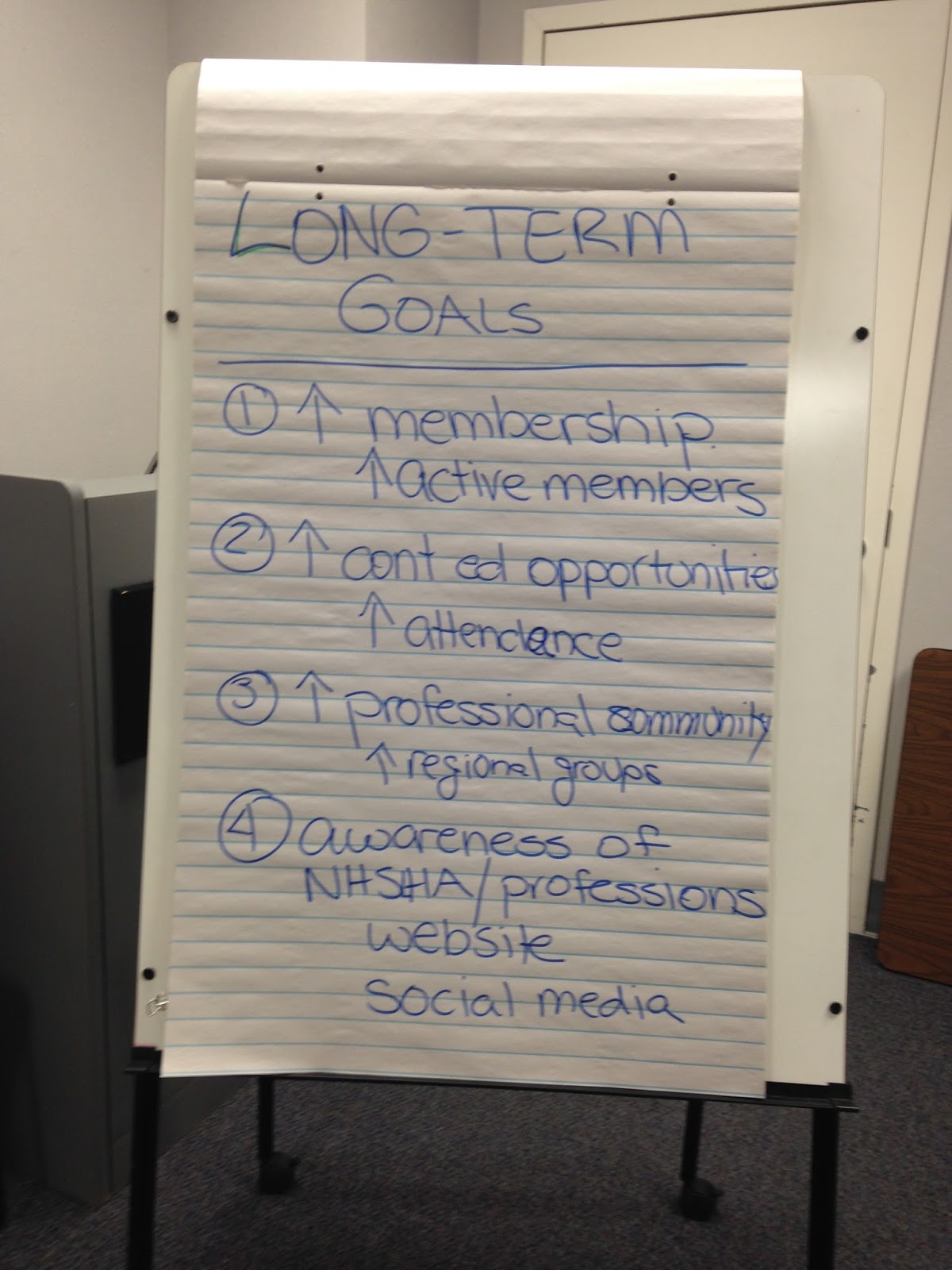
Since that original post I changed roles in NHSLHA and am now the President-Elect. On May 30, 2015 our association participated in a strategic planning session facilitated by Susan Adams of ASHA. It was a fabulous experience not just for the three year plan we devised, but for the opportunity to collaborate with our NHSLHA board as a team committed to revitalizing our association in an atmosphere of camaraderie and humor (Yes, you are a FUNNY group).
I am so excited to be a part of the growth of our association. Recently someone said to me, “Motivation is a concept. If you want to effect a change you need an action.” I can be as motivated as I want to change and grow, however, unless I become active, there is no change nor growth.  To the future! Cheers!

Interview With a Speech-Language Specialist: Part 6 of the Blog Chronicles

Where has the month gone? Just when I think I have a handle on EVERYTHING, it all slips away! I admit, I am very excited for the end of the school year. This summer will be taking us on several college visits and I am hoping to meet some of my speech “besties” while on the road. Summer is so restorative to me, but we’re not finished yet, soooo without further ado, I present the next installment of the blog chronicles. In NH we have an emergency certification for speech-language specialists during periods of critical shortage.

“An individual may obtain Alternative 4 Certification Path for Critical Shortage Areas with a bachelor’s degree in Speech Pathology or Communications Disorders. By plan completion, candidates for Speech-Language Specialist must obtain a master’s degree in communications disorders or a closely related area.”
My friend holds this certification and agreed to add her two cents to the blog series.

How do you see a true multidisciplinary team functioning?

A true multidisciplinary system works best when each member’s expertise is understood and appreciated, members consult with one another prior to making important programming decisions about students and once programming is established, consult continues relative to progress. Ideally co-treating among related service providers would happen, especially for the youngest students.

What message do you have for the powers that be (administration, DOE, elected officials, etc. Your choice).
There is nothing more important to our future as a society than the education of our children. When we invest in the education of our community’s children we are at the same time, investing in the future of our community. On a related note, post-secondary education should be accessible to all who want it, and we need to make it affordable because potentially qualified people are shying away from lower paying careers (like education) because of the burden of debt.
What do you see as the most pressing issue impacting our students today? Why?
I feel as though students today are not taught with enough time and attention to the basics of ‘HOW’ to learn. It seems that the expectations are skewed more towards quantity with less regard for quality. Also, tracking every student towards a four year college degree is a mistake. Our society needs quality tradesmen and tradeswomen and there are less and less of the types of programs (i.e.: vocational education) in public schools that allow students to explore these options.
What energizes you to come to work everyday? What keeps it “fresh” for you?
I am energized by the camaraderie of working closely with my colleagues whom I respect and also have respect for me. What keeps things “fresh” for me is the challenge of working with all the different types of learners and figuring out best therapy practices.
Describe your dream work environment? How does your dream compare with your reality?
How can you make it a reality?

My dream work environment would allow all young children to attend a quality preschool with certified early childhood teachers at no charge and would have a teacher/parent mentorship component so that parents who need it could learn some skills relative to early childhood under the mentorship of a teacher or other experienced parent. Right now, although we have an integrated preschool, only parents of typically developing students that can afford preschool can attend. Children who do not have an IEP, but are borderline at-risk because of poverty or other factors cannot attend. Also, although we try to communicate with parents, there is very little hands-on training of parents in preschool.

Well said, my friend, well said! I agree wholeheartedly! I sometimes can’t believe how fortunate I am to know such talented professionals!

Bias and Education

I fret. I stew over things and get my stomach all turned around. My thoughts whirl around the past, the present, and the future. Bias and education is a subject that has been a concern of mine for quite some time, however it moved to the forefront when our own children entered middle school and many of the materials they were exposed to reflected only a single perspective.

While it is gravely unpopular to admit this, I lean to the right, not completely, but on issues of balance and fiscal responsibility. I value all life, therefore neither support abortion nor the death penalty. I am also a strong advocate for peace and social justice. I value the notion of education and helping others became self-sufficient. “If you give a man a fish, he’ll eat for a day. If you teach a man to fish, he’ll eat for life.”

This morning I saw an article posted on a news website for kids, reporting on the recent Amtrak train crash. The article alluded to the cause of the the disaster as reduced funding of the railway system from 1.4 billion to 1.1 billion. The article did mention the engineer was going 100 mph in a 50 mph zone, nevertheless, the article further stated, a curve, that should have been straightened with these funds, was the crux of the issue. The article didn’t mention that the cell phone records of the engineer will soon be under scrutiny as his speed increased from 70 mph to 106 mph around the curve. Curves happen; on roads, on tracks, in life. We must exercise caution around a curve because when taken too quickly disaster is around the bend. This may not be solely an infrastructure issue (while, I’m sure upgrades are needed). On the surface it appears this is a negligence issue, but we don’t know. Knee jerk reactions don’t provide answers. Knee jerk reactions are self serving and do little to promote dialogue and problem solving.

Where is the opportunity for comparison in education? The practice of exploring thesis, antithesis, and synthesis is crucial when teaching children to make informed decisions. When was the last time students were asked to explore the positives of climate change or even to look at the research debunking global warming? The trend du jour may be captivating, but it lasts a nanosecond (remember #bringbackourgirls? What level of help has been offered to find those poor girls since?).

I have seen this expression of only one side of the issue being offered in education over and over and over. Whether it is reading material or teacher bias the outcome is the same. The opportunity for thought, the opportunity for academic conversations, the opportunity for dissent is squelched. Historically, the effects of one-sided education have been horrific. We only need to look to Hitler, Mussolini, Stalin to appreciate how hate is fostered.
Yes, our kids are not immune to the current American zeitgeist. Our kids are taught to eschew values, faith, work, life.
The Common Core State Standards in the area of Speaking and Listening clearly define collaborative discussion and analysis. As speech language pathologists we encourage higher order thinking.
We are responsible for educating those who will run the show as adults and it is beholden to us to present all sides of an issue. Our personal bias should not be the focus, but rather the dissemination of information and the tools necessary for formulating opinions.

The upshot is, we are all entitled to our own opinions. We are not entitled to our own facts. Lets give our students the facts, all the facts and encourage them to become true, informed thinkers who are able to develop and support their own opinions whatever they may be.

Comprehension and Collaboration:
CCSS.ELA-LITERACY.SL.7.1
Engage effectively in a range of collaborative discussions (one-on-one, in groups, and teacher-led) with diverse partners on grade 7 topics, texts, and issues, building on others’ ideas and expressing their own clearly.
CCSS.ELA-LITERACY.SL.7.1.A
Come to discussions prepared, having read or researched material under study; explicitly draw on that preparation by referring to evidence on the topic, text, or issue to probe and reflect on ideas under discussion.
CCSS.ELA-LITERACY.SL.7.1.B
Follow rules for collegial discussions, track progress toward specific goals and deadlines, and define individual roles as needed.
CCSS.ELA-LITERACY.SL.7.1.C
Pose questions that elicit elaboration and respond to others’ questions and comments with relevant observations and ideas that bring the discussion back on topic as needed.
CCSS.ELA-LITERACY.SL.7.1.D
Acknowledge new information expressed by others and, when warranted, modify their own views.
CCSS.ELA-LITERACY.SL.7.2
Analyze the main ideas and supporting details presented in diverse media and formats (e.g., visually, quantitatively, orally) and explain how the ideas clarify a topic, text, or issue under study.
CCSS.ELA-LITERACY.SL.7.3
Delineate a speaker’s argument and specific claims, evaluating the soundness of the reasoning and the relevance and sufficiency of the evidence.

Presentation of Knowledge and Ideas:
CCSS.ELA-LITERACY.SL.7.4
Present claims and findings, emphasizing salient points in a focused, coherent manner with pertinent descriptions, facts, details, and examples; use appropriate eye contact, adequate volume, and clear pronunciation.
CCSS.ELA-LITERACY.SL.7.5
Include multimedia components and visual displays in presentations to clarify claims and findings and emphasize salient points.
CCSS.ELA-LITERACY.SL.7.6
Adapt speech to a variety of contexts and tasks, demonstrating command of formal English when indicated or appropriate. (See grade 7 Language standards 1 and 3 here for specific expectations.)

Interview With a Speech Language Pathologist: Part 5 of the Blog Chronicles

It’s the second week of May already! I have loved following our speech peeps and all the Better Hearing and Speech Month hoopla on social media. SLPs are such a creative and energetic group of folks. It is, then, very fitting that my first post of May and the continuation of the interview series be contributed by an amazingly gifted SLP friend of mine. As with all the guest contributors, I have been inspired by her perspective.


How do you see a true multidisciplinary team functioning?
At first glance it may seem obvious that multidisciplinary teamwork means members of different disciplines working together. However, truly effective multidisciplinary teams are so much more. As those of us who have worked these teams can attest, some teams are truly functional and others seem less so. Some are doing great work and others are stuck. So why is this? I think it comes down to focus. Teams with members that are student-focused rather than self-focused are the teams that get the most accomplished. In my experience, they are also the teams that are the most enjoyable and professionally fulfilling to be a member of. Being student-focused means being an equal player with other members and not being reluctant to stand up as the “expert” in your discipline. It also means, listening to and being open to new ideas, perspectives, and approaches suggested by other disciplines. Occasionally teams become mired in questions about professional territory. Putting people together in groups representing many disciplines does not necessarily guarantee the development of a shared understanding. While it is important to practice within the scope of one’s profession and personal competency, you also need to be willing to go out on a limb and try something new occasionally. I have gotten some great ideas from other team members and love teams that do creative work to solve problems or find ways to help students excel. As long as members keep the line of communication open and reconvene regularly to assess outcomes and refine approaches, I don’t think you can go wrong.

What message do you have for the powers that be (administration, DOE, elected officials, etc. Your choice).
Well this is an easy one! My message to the “powers that be” is to invest in families. If there is one thing that we know for sure about student achievement in U.S. schools, it’s that achievement is associated with family income. The higher the income, the better students do at school. Rather than pouring money into enacting one school reform initiative after another, perhaps the focus should be on addressing issues such as poverty and inequitable school funding.

What do you see as the most pressing issue impacting our students today? Why?
There are so many issues impacting our students today that is difficult to choose just one – national standards, health and nutrition, school reform, high stakes testing, the list goes on and on. However, because I work primarily with preschool and elementary school students, my thoughts come from this context. The issue that I see as relatively pressing revolves around play. Is it just me? Have you noticed that play seems to be on its way out? Apparently the American Academy of Pediatrics concerned about this too. According to their April 2015 report, what children really need for healthy development is more time for old-fashioned play. They need more free time for recess and for unstructured time at home in order to increase their social and emotional health. Unfortunately it seems just the opposite is happening. Less time is available for children to romp around the house, build imaginary worlds, and explore the outdoors. I think there are multiple factors contributing to this. Among these is the pressure for children to achieve at earlier ages in both academics and structured sports. This can lead to over scheduled children both at school and at home. I also think that the increased access to electronics, and the devices that go with it, is an obstacle to more creative and physical outlets. Like many of you, I am wondering what the long term consequences to child development will be.

Reference: http://pediatrics.aappublications.org/content/129/1/e204.full.pdf

What energizes you to come to work everyday? What keeps it “fresh” for you?
Having a personal vision and mission is what keeps me coming to work every day. Luckily, I work in an environment where the vision I have for my work is closely related to my personal vision. Having a job that reflects my personal vision is powerful because it allows me to stay grounded in the present while working towards the future. It allows me to be what I think of as a “work-a-frolic”. I am working hard, but that work is fulfilling and enjoyable. It is a good frame of mind to be in and I encourage you to work on defining your own personal vision and mission if you haven’t already done so.

Describe your dream work environment? How does your dream compare with your reality?
How can you make it a reality?

Recipe:
My Ideal Work Environment

3 cups of awesome students
1 cup inspired teachers
¼ cup creative therapists
½ cup fabulous special educators
½ cup marvelous support staff
½ cup exceptional administrators
2 Tbsp respect
3 Tbsp compassion
2 Tbsp positivity
1 tsp teamwork
2 tsp flexibility
1 tsp diversity
Dash of fun (to taste)

Directions: Preheat school to warm. Add students, teachers, support staff, and administrators. Mix until combined. Sing, smile, learn, and play. Combine with therapists and special educators. Be careful not to over-stir. Pour mixture into a large, comfortable, well-supplied classroom. Top with respect, compassion, positivity, teamwork, flexibility, diversity, and fun. Cook for about 7 hours. Serves all!

That is certainly a recipe for success.

Chicken Soup for the SLP Soul: Funny Edition Linky Party

Finally, May is here. Not only does May signal the end of the school year, but it’s our month; our month to shine! I’m linking up with the indomitable Felice, our own Dabbling Speechie for her Chicken Soup for the SLP Soul! What a great idea! I really enjoy reading about all the funny experiences we have had. I certainly have had my fair share. I wish I had written them all down, I’ve forgotten so many, but this one is seared in my memory. Enjoy!
When I was still in New Jersey the elementary school I worked in offered a 3-5 class for students identified as “communication handicapped.” I was in my early thirties and loved working with the preschool age group. I really miss them for their energy and unabashed honesty and love. One of my favorite little ones had these big, big blue eyes and little blond curls. She used to melt my heart by saying,”My love you, Mith Annie!” My word, she’s an adult now!
One day I was returning something to a cabinet before walking another three year old companion back to class. He was standing just beside and a “little behind” me, looking up with those admiring eyes and a big, big smile. He took a deep breath and uttered the words that nearly bowled me over; “Ummmm… Miss Annie? You have… umm… big pants.” Whaaaaat? Did this three year old just tell me I have a big A  butt? Yes, yes, I think he did! I went home and joined weight watchers.
I’m really looking forward to reading your funny SLP story. I need a good laugh!

Getting to Know Your Favorite Online SLPs: A Linky Party

I am linking up with Natalie Snyders to share a little bit about who I am. If you read my blog you know I wear my heart on my sleeve, so I’m fairly transparent. These are the more unknown details, the items I don’t frequently talk about.

Who am I?
My name is Annie and I currently live in New Hampshire. Previously, I made New Jersey my home and despite living in NH I will always be a Jersey girl! I am married to my best friend and we have two teenagers, nearly 17 and nearly 15. At this point our kids are fairly independent and my husband and I are reclaiming the time we used to have to pursue our interests. I have been working as an SLP since 1983 primarily in the schools, although for a while early on I did contract with a home health agency to supplement my income. I contracted to a number of schools in NH when our children were young so I could be home and provide some financial support to our family. I am finishing up my 12th year in a public school in NH and see myself retiring from this position in 6 years or so. In July it will be one year since I started blogging. I started in order to challenge myself to step out of my comfort zone. What has followed as a result has been transformational.

What do I offer?
I have enjoyed this question, because what I offer is a little different. While I do have a TpT store, there are not a lot of products there and most of them are free. My joys come from posting what I do each and every day on Instagram (follow me at anniedoyle226) and sharing my musings and revelations on my blog (doylespeechworks.blogspot.com). My personal and professional journeys are completely intertwined and I really enjoy sharing what I have learned along the way.

My dream job?
My dream job would be entrepreneurial in nature. I really want to be my own boss and I would be cooking. I would love to own a shop that prepared different specials daily and only those specials would be available on that day. Of course there would be a variety; sweets, breads, pasta and meat dishes, all Italian and delicious. My shop would also stock hard to find Italian foods and delicacies. Things I’ve missed since moving to New England.

3 of my favorite things?
It’s very challenging to commit to only three favorites. Reading, cooking/baking, spending time with my friends and family. I have to add a fourth…puzzles, all kinds.

Who else should I know?
I have connected with so many people in this great big social media world. It is impossible to limit myself to just one, but one of the first friends I made once I entered the blogosphere was SparklleSLP. I consider her my friend, despite never having met her face to face! Isn’t that wild? She is smart and talented and supportive and just so genuine. Check out her blog (http://sparklleslp.blogspot.com/) and her TpT store (https://www.teacherspayteachers.com/Store/Sparklle-Slp).

Thanks to Natalie for hosting this fun linky party. It’s been fun to learn about my most favorite bloggers on Earth; SLPs!

Cut to the Chase

This post may be disconcerting to some folks out there in the SLP world. Understand the ideas expressed are mine and mine alone and have allowed me to reframe my thinking around my desire for approval, for significance.

I recently began a book that supports the notion we are “Made to Crave” (Lysa Terkeurst). I began this study because I have had an on again off again marriage to food and I really want to get a handle on why. I’ve been 99 pounds, whereby I starved myself consuming 1/2 of a rice cake and a diet pill. I’ve been 186 pounds, whereby I consumed everything and anything. I am beginning to understand that I have been wired for cravings. As I read I was intrigued by this line, “…the object of our craving was never supposed to be food or other things people find themselves consuming such as sex or money or chasing significance.” WHOA! What was that last item? Chasing significance? This last “craving” triggered something in me. I considered my life at work and how so many conflicts, hurt feelings, and misunderstandings were soundly embedded in my desire to be significant, to be heard, to be right, to be valued.

I follow the social media chatter closely and read the posts describing parent put-downs, administration admonitions, and teacher tirades. What typically follows are rescue posts by well-meaning SLP friends. These posts offer advice and solutions and…statements espousing our significance and value. I also read many posts expressing disdain and sometimes outrage over words like “speechies” or “speech teacher” terms that supposedly diminish our significance. I know, I so want parity with other professionals. I so want respect from others that sometimes who I want to be outshines what I do!

Dear SLP friends, read this aloud. “I am significant if I only ONCE remediate a distorted /r/. I am significant if I only ONCE tell a child, “I believe in you.” I am significant if I only ONCE hold the hand of a parent and say, “I hear you.”

I do not need to chase significance in the size or name of my room. Whether I call it a classroom, speech nook or clinic makes no difference. It’s what I do in that space that brands me. I don’t need to chase significance in my title. I will admit I was averse to “speech teacher,” but my title doesn’t qualify me, my actions do. I do not need the school psychologist to agree with my testing results or diagnoses to affirm my significance, for my value does not rest in the approval of another person. As long as I have done my work professionally, responsibly and ethically what I do is significant.

The career I chose was inspired. I believe I have written about how I chose SLP before, but in case you missed it, here is my story. I was 18 years old and not a real go-getter. I had lost my Mother three short years earlier and was living with my 29 year old brother, his 28 year old wife and my 14 year old brother. We were still shell shocked and learning the moves to our new dance. I was completing college applications and had not set the bar high. After my Mother died I did the bare minimum in high school, participating in nothing extracurricular. My applications were sparse to say the least. When I got to the the section of the application listing possible majors I knew I could do most anything. I was, for all intents and purposes, a tabla rasa. So I did what an 18 year old might do when faced with a life changing decision, I closed my eyes and pointed. I landed on speech language pathology. It was one of the most defining moments in my life. Here I am 32 years later still passionate about the field I “chose.” Do I need to chase significance? No! Am I significant by virtue of what I have been called to do? Oh, yes!

I was chatting with my friend, Heidi one morning last week before work. It was time for me to pack up and head out. She left me with this warm send off, “Have a good day. Change lives.” How much more significance do I need to chase? I change lives.

Interview With an Occupational Therapist: Part 4 of the Blog Chronicles

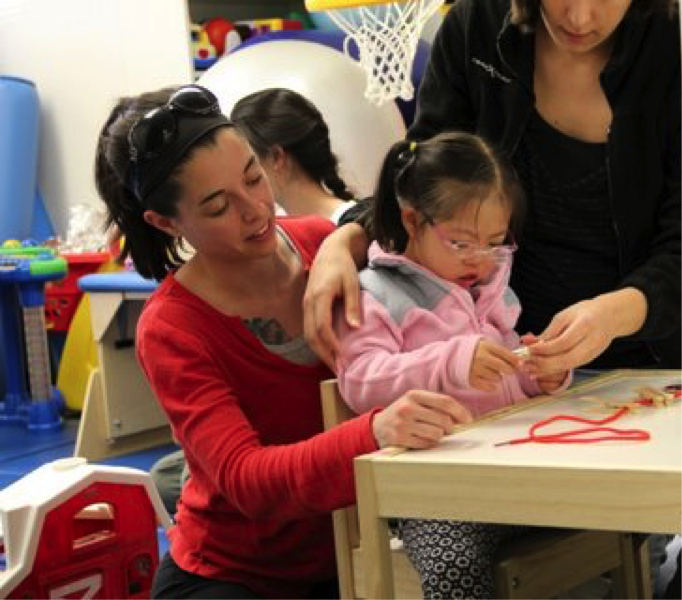
Photo Credit: Starfish Therapy

April is OT month, so in honor of the wonderful men and women who are indispensable to so many, the next guest “blogger” is one of my favorite occupational therapists. What follows are some beautiful responses; grab a tissue!

How do you see a true multidisciplinary team functioning?
The true nature of a multidisciplinary team is a group of unique and specialized individuals that collaborate with one another, sharing their own distinct knowledge, experiences, and talents, in order to collaborate towards a common goal. When serving the best needs of students this approach is essential and includes many players, including teachers, specialists, and of course the student and family. This is a delicate balance that is often very challenging to achieve in an ideal sense due to current constraints of the system and society in general. Life is just so busy! The value of sharing ideas, knowledge, struggles, and successes as a team is one that simply cannot be lost or forgotten if we are to do our best work and to truly meet the needs of our students. We are all just one piece of a very big and complex picture.

What message do you have for the powers that be (administration, DOE, elected officials, etc. Your choice).
I like to think that no matter what our status or title we all started out on this journey for the goal of helping children and positively impacting the future of our society. Our career paths likely all started because we saw a need, felt a calling, or had a passion for developing young minds, supporting families, and celebrating the joy of helping others. Unfortunately the nature of implementing these supports is complex and becomes entangled with the dynamics of economics and politics, among other things. I think at the end of the day, particularly the challenging ones, we all need to step back from the craziness and remember that person we were when we started out on our journey. What inspired you then? What were you hoping to achieve and contribute? No matter if we are “in the trenches” or writing policy behind a desk, if we can try to reach that common place of inspiration and understanding maybe we can be at least one step closer to meeting the needs of today’s students.

What do you see as the most pressing issue impacting our students today? Why?
Beyond the challenges of meeting their basic needs of food, shelter, safety, and love (which, sadly, can be a daily struggle for too many children today)…children need to move, play, and get messy!! Call me old fashioned, but I am so fearful that with the trend towards instant gratification, increased screen time, over-scheduling, and growing academic and social demands that we are forgetting what is vitally important to child development. Children need to be able to explore their world through movement and use their hands to build and create. They need to be safe, but still have the freedom to play imaginatively and to learn to solve problems through trial and error. These are skills that build a foundation for the rest of their lives.

What energizes you to come to work everyday? What keeps it “fresh” for you?

I gain energy and motivation from the little everyday successes with students, especially when I can find the “just right” challenge to engage and inspire children that can be more difficult to connect with. It is even better when you can see skills and learning transferred into the classroom or on the playground. I find so much value in connecting with colleagues on a personal and professional level, although I wish there were more hours and opportunities within the days to do so. When I feel like I am becoming stagnant in my treatment plans and overall practice, I love attending an engaging workshop or reading a good book to learn something new.

Describe your dream work environment? How does your dream compare with your reality?
How can you make it a reality?
A dream work environment would be one where time and funding are plentiful! I would love to be able to implement some dream accommodations and strategies to engage all students. This would include access to non-traditional tools for all students, not just for those that “need” them. How great would it be to walk into a classroom where a student could read in a hammock swing, while another sits on a therapy ball to take notes? Maybe a trampoline could be built into the floor in a corner of a kindergarten classroom and a zipline through the halls! Ok, that may be a bit over the top, but it is nice to dream. I would love to be able to work in each classroom to provide strategies and support through a truly inclusive model and also have time for regular collaboration and connections with my colleagues and the families of the children we support.

After reading this I sent the following reply, “I seem to cry at the drop of a hat these days, but your responses were so heartfelt, spot on, and professional I did just that. Absolutely beautiful. You are an amazing OT and a warm and generous person.” What more needs to be said?